

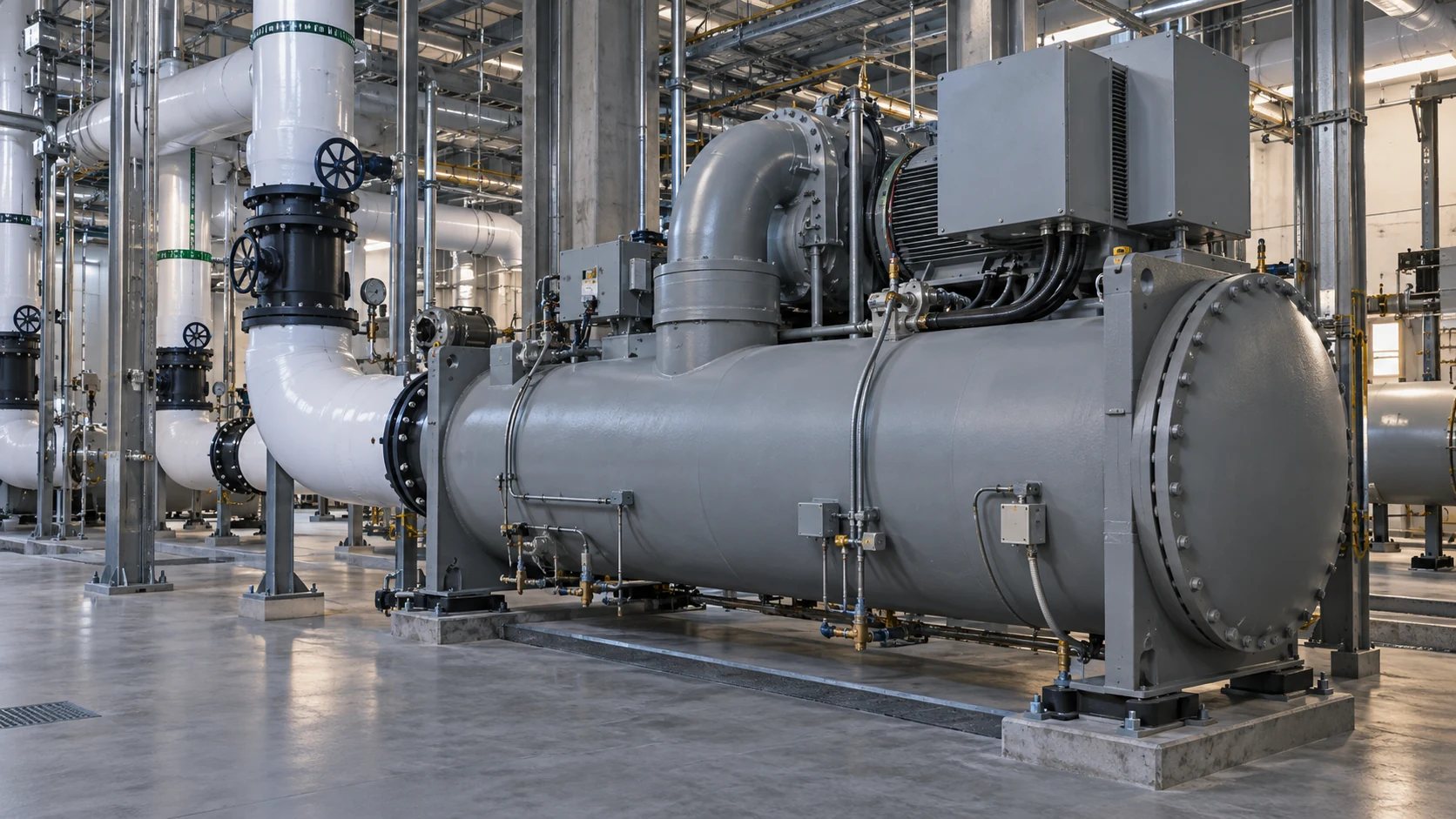
A refrigerant service visit should leave the data center operator with enough information to identify the appliance, account for refrigerant added, calculate any required leak rate, and assign the next action. An invoice saying that cooling has been restored is rarely enough for that review. Build the compliance register around individual refrigerant appliances and their actual use. Then apply the relevant Section 608 and AIM Act requirements. This guide uses the federal rules current on September 15, 2026; state requirements and site-specific obligations need a separate check.
Before you start
- Identify each independent refrigerant circuit, refrigerant composition, full charge, and application.
- Distinguish Section 608 service rules from AIM Act leak-repair and automatic-detection requirements.
- Link refrigerant additions to calculations, repair decisions, verification, and records.
- Keep operating obligations separate from restrictions on new equipment manufacture and installation.
Start with the appliance and refrigerant
| Program | Applicability question | Operating consequence |
|---|---|---|
| Section 608, Part 82 Subpart F | Which refrigerant-handling provisions apply? Does the appliance contain 50 pounds or more of an ozone-depleting refrigerant or a blend containing one? | Service practices and certification remain relevant; qualifying ODS appliances also have leak-repair duties. |
| AIM Act, Section 84.106 | Does an appliance have a full charge of at least 15 pounds containing an HFC or a covered substitute, with no applicable exception? | Leak-repair and associated records apply from January 1, 2026. |
| AIM Act, Section 84.108 | Is it qualifying commercial or industrial process refrigeration with at least 1,500 pounds of covered refrigerant? | Automatic leak detection requirements depend on installation date and the rule's conditions. |
The AIM leak-repair rule excludes appliances containing solely ozone-depleting refrigerant and appliances in the residential and light commercial air-conditioning and heat-pump subsector. EPA notes that chillers and certain VRF systems have their own subsectors. A label such as office cooling is insufficient to establish that exception. Record the equipment classification and the reason it fits before excluding it.U.S. Environmental Protection Agency
Create a register at the refrigerant-circuit level
Part 84 defines each independent circuit in a device with multiple circuits as a separate appliance. It defines full charge by the refrigerant needed for normal operation, using permitted methods such as manufacturer information, calculations, or measurements. Its commercial-refrigeration definition concerns food and cold-storage uses. Industrial process refrigeration has a separate process-based definition. Classify the actual application; neither a commercial building nor a large cooling load establishes one of those categories by itself.Electronic Code of Federal Regulations
| Register field | Useful supporting evidence |
|---|---|
| Appliance and circuit identity | Asset tag, equipment serial number, refrigerant schematic, and location. |
| Refrigerant and full charge | Product designation, composition, commissioning record, and charge determination. |
| Application and installation date | Design narrative, served load, commissioning date, and classification review. |
| Accountable people | Owner or operator contact, service contractor, and person reviewing each refrigerant addition. |
Reconcile this register with the maintenance system before using it to schedule work. A single chiller asset may contain more than one independent circuit, while the contractor's invoice may use a different equipment nickname. Resolve those mismatches once, attach the mapping, and give contractors the identifiers required on future service records. Flag an unknown full charge for investigation rather than copying a value from a similar unit.
Make every refrigerant addition a review event
For covered AIM appliances, refrigerant additions generally require a leak-rate calculation, with specified exceptions. The applicable rates are 30 percent for industrial process refrigeration, 20 percent for commercial refrigeration, and 10 percent for comfort cooling and other covered categories. When an exceedance triggers repair, the ordinary window is 30 days; 120 days applies if an industrial process shutdown is required. Initial and follow-up verification, subsequent inspections, and possible retrofit or retirement steps must also be assessed.U.S. Environmental Protection Agency
Use a short service-review sequence: match the invoice to the circuit, verify the refrigerant and quantity, check whether a calculation exception applies, perform the appropriate calculation, and assign the resulting action. Capture both the technician's work date and the date the operator receives the record. Set an internal review target that leaves time to act within the applicable legal window. A late invoice should be visible as a process failure.
Consider an illustrative 100-pound appliance receiving 8 pounds after 90 days. Under the annualizing method, 8 divided by 100, multiplied by 365 divided by 90, gives about 32.4 percent. It is not simply an 8 percent annual leak rate. This example assumes the ordinary annualizing inputs apply; special first-calculation rules for 2026 need separate treatment. Use the facility's required calculation method consistently and preserve its inputs.Electronic Code of Federal RegulationsElectronic Code of Federal Regulations
Do not close the compliance task when the cooling alarm clears. Ask for the leak location, repair performed, test results, and any unresolved defects. Coordinate the operational recovery with the compliance review so a temporary repair does not disappear from the backlog. If replacement is being considered, name the decision owner and preserve the service history that led to that decision.
Check automatic leak detection separately
Section 84.108 applies to qualifying industrial process or commercial refrigeration appliances with a full charge of at least 1,500 pounds containing an HFC, or a substitute subject to the rule's GWP test. Qualifying appliances installed from January 1, 2017, through December 31, 2025, must have automatic leak detection by January 1, 2027. For qualifying appliances installed on or after January 1, 2026, installation and use are required at installation or within 30 days. The rule also requires annual auditing and calibration.Electronic Code of Federal Regulations
Treat a building-management alarm as a system to investigate, not proof that this requirement has been met. Obtain the detector specification, monitored equipment list, commissioning results, alarm routing, and maintenance history. Ask the mechanical lead to compare the design with the rule's applicable performance and operating requirements. Have the shift team demonstrate who receives an alarm and how it reaches the person responsible for a refrigerant compliance decision.
Specify the records the operator must receive
Section 84.106 requires service information including appliance identity, date, work performed, refrigerant type and amount, and applicable charge and leak-rate information. Most listed records must be kept for at least three years; the full-charge determination is retained until three years after retirement. It also has conditional EPA reporting requirements, including a March 1 report for covered appliances leaking at least 125 percent of full charge during the previous calendar year.Electronic Code of Federal Regulations
For qualifying Section 608 ODS appliances, EPA separately identifies owner service records, leak inspections, and repair-verification records. Technicians have their own documentation duties. Map each contractual deliverable to the appropriate program so an older Section 608 service template does not become the entire compliance process for the HFC equipment added to scope in 2026.U.S. Environmental Protection Agency
Set up a sample handover before renewing the service contract. Ask the contractor to complete one record using your asset identifiers and required fields. Confirm that staff can export it after a contract ends, retrieve it during an outage, and join it to earlier repairs. Give rejected or incomplete records an owner and due date. Keep proposed internal turnaround times clearly identified as contract terms rather than federal deadlines.
Verify technician certification against the work being performed and the applicable certification type. EPA explains the certification categories and recognizes certification through approved testing organizations. Retain the evidence used during contractor qualification and refresh it when personnel change. An employer's service agreement should identify who will perform regulated work, rather than relying only on the contractor's company name.U.S. Environmental Protection Agency
Keep procurement restrictions on a separate timeline
Part 84 Subpart B governs technology transitions for specified products and systems. Current Section 84.54 lists January 1, 2027 restrictions at GWP 700 or greater for the identified data-center, IT-facility, and computer-room cooling products and systems. Check the exact product or system category and regulated activity. These provisions answer a different question from the operating leak-repair obligations that began in 2026.Electronic Code of Federal Regulations
For a cooling replacement, request a written equipment classification, refrigerant designation, installation plan, and service strategy from the design team. Put procurement milestones beside the applicable rule dates. Keep the existing appliance's service obligations active while the replacement is ordered or installed. A purchase decision does not close open repair, verification, or recordkeeping tasks for equipment still operating.
Review the program through one real maintenance job
- Select one recent refrigerant addition and trace it from the technician's record to the correct appliance.
- Reproduce the applicability decision and any leak calculation using saved inputs.
- Confirm who approved the repair response and where verification evidence is stored.
- Check whether the event changes an inspection schedule, reporting obligation, or replacement decision.
- Confirm that the facilities team can retrieve the complete record without asking a former contractor.
Use the gaps from that exercise to improve the next service visit. Common practical fixes include a circuit identifier on the work order, a mandatory quantity field, an operator review step, or a clear escalation contact. Repeating a simple traceable workflow across the campus is more useful than maintaining a policy that nobody checks against actual maintenance records.
Questions that come up.
Did the 2020 Section 608 change remove HFC operating requirements?
It removed the Section 608 leak-repair extension to substitute refrigerants, while other handling provisions remained. Separate AIM Act leak-repair requirements apply to covered appliances from 2026.U.S. Environmental Protection AgencyElectronic Code of Federal Regulations
Does every large data center chiller need automatic leak detection under the AIM Act?
Check appliance use, refrigerant, full charge, and installation date. Section 84.108 targets qualifying industrial process and commercial refrigeration; cooling capacity alone does not establish applicability.Electronic Code of Federal Regulations
Can the maintenance contractor own the entire compliance record?
The contractor supplies important service evidence, but the owner or operator has recordkeeping and compliance duties. Arrange access, delivery, review, and retention so the site can demonstrate its decisions.Electronic Code of Federal RegulationsU.S. Environmental Protection Agency
Sources and references.
Primary sources checked for this guide on . The location, equipment, and operating plan determine which requirements apply to a project.
- Electronic Code of Federal Regulations40 CFR 82.157: Appliance maintenance and leak repair ↗
- Electronic Code of Federal Regulations40 CFR 84.106: Leak repair ↗
- Electronic Code of Federal Regulations40 CFR 84.102: Definitions ↗
- Electronic Code of Federal Regulations40 CFR 84.108: Automatic leak detection systems ↗
- U.S. Environmental Protection AgencyAIM Act Leak Repair Requirements for Appliances Containing HFCs and Certain Substitutes, January 2026 ↗
- U.S. Environmental Protection AgencyRecordkeeping and Reporting Requirements for Stationary Refrigeration ↗
- U.S. Environmental Protection AgencySection 608 Technician Certification Requirements ↗
- Electronic Code of Federal Regulations40 CFR 84.54: Restrictions on the use of hydrofluorocarbons ↗
- U.S. Environmental Protection AgencyRegulatory Updates to Section 608 Refrigerant Management Regulations ↗
Put the requirements to work
Bring the project.
Map the path to approval.
Connect the applicable requirements to the design, the evidence, and the people responsible for each decision.
Talk to an expert