

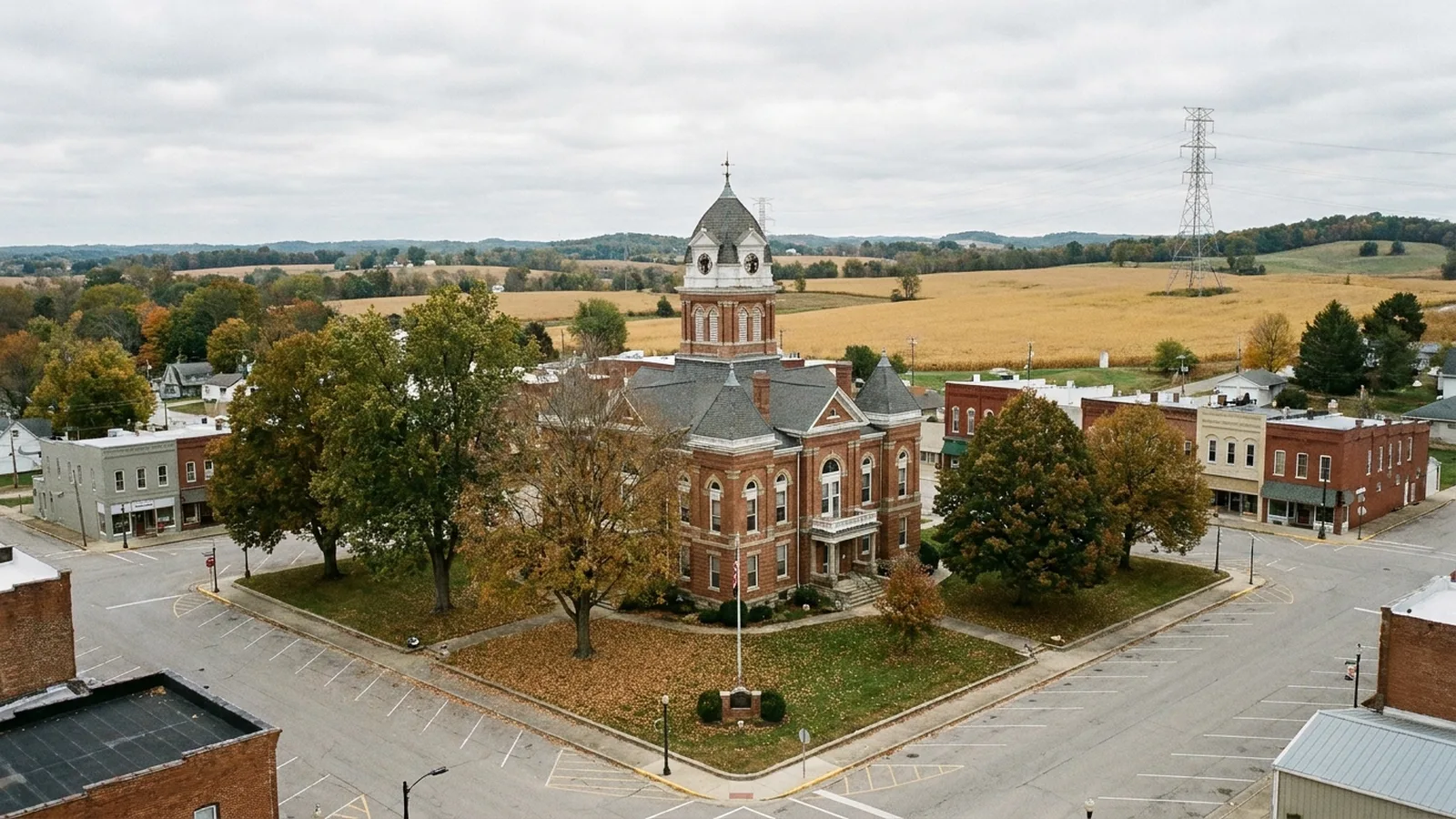
Screen the county before you screen the parcel. In 2025 and 2026, data center projects with land under contract were stopped by moratoriums, court rulings on rezonings, withdrawn petitions, and outright municipal bans. Most of those signals were public before anyone signed an option: a pending ordinance on a planning commission agenda, a packed hearing on a nearby project, a county with no zoning power and a lawsuit already filed. Run a short local-approval check alongside the power check, and write what you find into the option terms.
Before you start
- Check for an active or proposed moratorium in both the county and any city that could annex the site. They are separate governments with separate clocks.
- Find out whether a data center is a by-right use, a conditional or special use, or needs a rezoning. A vote is a risk you can price; an unknown path is not.
- Treat recent denials, withdrawals and lawsuits within the same county as the best predictor of how the next hearing goes.
- Size option periods and extension rights to the local calendar: moratorium expiry dates, hearing schedules and elections.
Local approval is now a gate, not a formality
Data Center Watch, a tracker of community opposition, counted at least 75 US data center projects worth about $130 billion as blocked or delayed in the first quarter of 2026 alone. It also reported more than 300 state data center bills filed in the first six weeks of the year, and statewide moratorium proposals in 14 states. Its definition of delayed is broad and includes extended reviews and lawsuits, so read the totals as a measure of friction, not of cancelled megawatts.Data Center Watch
The friction lands on land. A buyer can hold a utility study for 300 MW and still lose the site because the county board pauses applications for six months, or because a judge voids the rezoning on a notice defect two years later. Power is still the scarce input. But a parcel with documented power and no workable path to a building permit is a stranded option.
The fix is cheap. Most of the evidence sits in agendas, minutes, local news and court dockets. It takes a few hours per county, and it belongs in the kill sheet before any title, survey or environmental spend.
What the 2025 to 2026 cases show
The table below lists cases that each show a different way a site dies or stalls. Status is as of November 2026.
| Jurisdiction | What happened | Status as of November 2026 |
|---|---|---|
| Prince William County, Virginia (Digital Gateway, about 2,100 acres) | A circuit court voided the rezonings in August 2025 over public notice failures. The Court of Appeals affirmed on March 31, 2026. | The county and one developer dropped appeals in April 2026. The last developer withdrew its Supreme Court appeal on July 2, 2026. The rezonings stay void. |
| Tucson and Pima County, Arizona (Project Blue, 290 acres) | Pima County approved the land sale and project. Tucson's council voted unanimously on August 6, 2025 to stop city work on it, after opposition over water and energy. | Pima County planners voted 8 to 1 on October 28, 2026 to advance stricter data center rules, with a Board of Supervisors hearing expected in early December 2026. |
| City of St. Charles, Missouri | One-year moratorium on applications in August 2025. | Converted to a ban on large-scale data center development in May 2026. |
| St. Charles County, Missouri | Six-month moratorium approved unanimously in July 2026 on developments over 100,000 square feet or 5 MW. | Active. A motion to extend it to 12 months failed amid doubt over whether state law allows more than six months at a time. |
| Georgia counties and cities | Coweta, Clayton, Troup, Pike, Lamar and LaGrange among those adopting moratoriums in 2025. Others wrote ordinances with noise limits, buffers and cooling water rules. | Most were short pauses. Coweta's 180-day pause was set to expire in November 2025 with a draft ordinance pending. Check each county's current code rather than the 2025 headlines. |
| Indianapolis (Franklin Township), Indiana | A 468-acre rezoning petition was withdrawn on September 22, 2025, before a City-County Council vote, after organized opposition over water and electric bills. | Withdrawn, not denied, so it could return. No refiling reported in the source. |
| Hood and Hill Counties, Texas | Hood County commissioners rejected moratorium votes twice in February 2026, then revoked a concept plan and were sued. Hill County adopted a one-year pause in May 2026. | Hill County faces a developer lawsuit seeking $100 million. County authority to pause development in unincorporated areas is contested. |
Three patterns repeat. First, the approval itself can be undone: Prince William's rezonings passed and were later voided on procedure, so a granted rezoning with litigation pending is not an entitled site. Second, a city and its county can act in opposite directions on the same land, as Tucson and Pima County did. Third, a moratorium is often a step toward a permanent rule. St. Charles went from a one-year pause to a ban in nine months.FOX 5 DCArizona's FamilySt. Louis Public Radio
State actions change the cost of a site, not just its approval
States have mostly acted through utility rates and tax law rather than siting bans. These changes shift who pays for grid upgrades and how long a buyer is locked in, which changes the value of an option.
- Georgia: in January 2025 the Public Service Commission approved a Georgia Power rule letting it bill new customers above 100 MW on special terms, including upstream generation and transmission costs, minimum bills and contracts of up to 15 years instead of 5. Every such contract goes to the PSC for review.
- Texas: SB 6, signed in June 2025, applies to loads of 75 MW or more in ERCOT. It requires disclosure of duplicate interconnection requests elsewhere in Texas, sets a $100,000 minimum initial interconnection fee, and requires large loads to accept curtailment during firm load shed with shutoff equipment installed.
- Minnesota: the 2025 data center law adds an annual fee of $2 million to $5 million for large data centers based on peak demand, ends the sales tax exemption on their electricity, orders a very large customer class at the PUC, and sets special permit conditions for consumptive water use above 100 million gallons a year.
These are state-level facts a seller's broker rarely mentions. They also feed local politics. In November 2025 Georgia voters replaced two incumbent PSC commissioners with challengers who won close to 63% of the vote, in races that centered on power bills. Local officials read those results.Georgia Public Service CommissionUtility DiveMinnesota House of RepresentativesGeorgia Public Broadcasting
What triggers opposition
The concerns are concrete and they show up in ordinance text. When a county writes a data center ordinance, it usually turns each complaint into a standard. Read the standard and you know what the last fight was about.
- Water. Forsyth County, Georgia bars data center cooling systems from the county water system, and Jones County requires closed-loop cooling. Water was the main complaint in Tucson and Indianapolis.
- Noise. Bartow County, Georgia caps data center noise at 65 dB by day and 55 dB at night, with a 200-foot property buffer.
- Power bills. Ratepayer impact is now a standard objection, and it drove the Georgia PSC races.
- Backup generators. Large diesel fleets bring air permits, fuel storage and testing noise, and neighbors raise them at hearings.
- Secrecy. Pima County commissioners said Project Blue came to them under a non-disclosure agreement and that they were misled. Code names and NDAs now draw suspicion on their own.
- Tax breaks. Abatements and sales tax exemptions are a common complaint where a project asks for them, and Minnesota has already narrowed one.
A site that needs a water main extension, sits within earshot of a subdivision and relies on a county tax abatement carries every one of these at once. A site on an existing industrial park with closed-loop cooling and no incentive request carries far fewer.Georgia Public BroadcastingArizona's FamilyMirror IndyKOLDGeorgia Public BroadcastingMinnesota House of Representatives
The county kill sheet
Run this before any parcel work, next to the power check. A red on the first row usually ends the site. The rest set the price, the option length and the contingencies.
| Signal | Where to find it | What it means |
|---|---|---|
| Active moratorium in the county or a city that could annex the site | Board and council agendas and minutes for the last 12 months; local news; county code updates | Stop unless the expiry date and the replacement ordinance are both known. Check whether the pause covers applications, approvals or permits. |
| Proposed moratorium or data center ordinance in draft | Planning commission agendas, staff reports, public hearing notices | Expect new standards on noise, water, setbacks or size. Model the site against the draft, not the current code. |
| Zoning path | Use table, definitions and conditional use standards in the zoning ordinance | By-right use in the current district is the strongest position. Special or conditional use means a public hearing. A rezoning means a legislative vote and a litigation window. |
| Recent denials, withdrawals or court challenges in the county | Minutes, local news, state court dockets | Opposition is already organized. A withdrawn petition can return, and so can the people who opposed it. |
| County land-use authority | State enabling law; county attorney opinions; whether the county has adopted zoning at all | An unzoned county or one with limited powers, as in unincorporated Texas, may mean fewer approvals but more lawsuits and less predictability. |
| Upcoming elections and hearing dates | County election calendar; board meeting schedule; PSC election calendar | A board that changes in January can reverse course. Time filings to avoid hearings in the weeks before an election. |
| Local utility stance | Utility economic development pages, large-load tariffs, recent rate cases | A utility filing for a new large-load class or collateral rule signals what service will cost and how local officials will be briefed. |
| Community benefit expectations | Recent development agreements and host fees in the county or nearby | Sets the cost of approval. A county that negotiated a host agreement last year will expect one again. |
| Water source and provider position | Municipal water policy, large water user ordinances, state permit thresholds | Bans on potable water for cooling or volume thresholds can force a closed-loop design or end the site. |
Score each row green, amber or red, and write down the document behind each color. A blank cell is not green. In Invariant's power evidence terms, a site with a rung 3 utility study in a county with a live moratorium is still a C until the local path is known.
Structure land options around the local risk
The kill sheet will not clear every risk. Some sites are worth optioning with an open local question. Write the question into the contract so it costs the buyer time, not the deposit.
- Make the option period match the real calendar. If a six-month moratorium is in force, add its remaining term, the hearing cycle for the replacement ordinance and the approval process itself. St. Charles County debated whether Missouri law allows a pause longer than six months at a time, which makes back-to-back renewals the likely tool. Plan for at least one.
- Tie extensions to public events. Give the buyer paid extensions that trigger automatically if a moratorium is extended or a zoning hearing is continued.
- Add an entitlement contingency with a clear definition. A rezoning or special use approval should count only when final and unappealable, or once the appeal period has run with no suit filed. The Prince William rezonings were approved and then voided in court.
- Include an annexation clause for sites near a city boundary. If the land could be annexed, the buyer needs the right to exit if the city's rules apply and they forbid the use.
- Cap the deposit at risk during the entitlement phase, and release it only after approvals are final.
- Keep the seller cooperative. Require signatures on applications and attendance at hearings where useful, and stop the seller from marketing the site while the option runs.
- Avoid an NDA that keeps the county in the dark. Some confidentiality is normal. A board that learns the end user's identity late may react the way Pima County's commissioners did.
Invariant runs this county screen before any site introduction. A moratorium, a voided rezoning or a contested county power question goes on the kill sheet with the source, and the site is tiered on power and local path together.St. Louis Public RadioFOX 5 DCKOLD
Questions that come up.
What is a data center moratorium?
It is a temporary local pause on accepting or approving data center applications while the government studies the use and writes rules. St. Charles County, Missouri adopted a six-month moratorium in July 2026 on developments over 100,000 square feet or 5 MW. Some moratoriums end in a new ordinance and some end in a ban.St. Louis Public Radio
Can a Texas county stop a data center in an unincorporated area?
Its powers are limited. Texas counties generally lack the zoning authority that cities have. Hood County commissioners twice voted down a moratorium in February 2026 over legal concerns, and Hill County was sued after it adopted a one-year pause in May 2026.KBTX / The Texas Tribune
Is a rezoning approval final once the board votes?
Not until any challenge is resolved. Prince William County's Digital Gateway rezonings were approved, then voided in court over public notice defects, and the ruling held through the last appeal in July 2026. Treat a rezoning as secure only once the challenge window closes.FOX 5 DC
Which states have changed rules for large data center loads?
Georgia, Texas and Minnesota are three examples. Georgia lets Georgia Power apply special terms and longer contracts to new loads above 100 MW. Texas SB 6 sets rules for loads of 75 MW or more in ERCOT, and Minnesota added an annual fee and a very large customer class.Georgia Public Service CommissionUtility DiveMinnesota House of Representatives
How does Invariant check local risk on a site?
Invariant runs a county kill sheet before any introduction: moratoriums, the zoning path, recent denials and lawsuits, county authority and the utility's position. A site with good power but an open local question is tiered lower until the question is answered.
Sources and references.
Primary sources checked for this guide on . The location, equipment, and operating plan determine which requirements apply to a project.
- Data Center WatchQ1 2026: Data Center Watch Report ↗
- FOX 5 DCQTS drops appeal, ending plans for massive Prince William County data center ↗
- Arizona's FamilyTucson City Council votes to end Project Blue ↗
- KOLDPima County planners advance changes to data center rules ↗
- St. Louis Public RadioSt. Charles County officials approve half-year ban on data center projects ↗
- Georgia Public BroadcastingWave of data center ordinances sweep through Georgia counties: how strict are they? ↗
- Mirror IndyGoogle withdraws Southside data center proposal in Franklin Township ↗
- KBTX / The Texas TribuneEight data centers threaten to transform this small Texas county. Local officials say they have no power to stop them ↗
- Georgia Public Service CommissionPSC Approves Rule to Allow New Power Usage Terms for Data Centers ↗
- Utility DiveTexas law gives grid operator power to disconnect data centers during crisis ↗
- Minnesota House of RepresentativesNew data center law: fees, tax changes and a very large customer class ↗
- Georgia Public BroadcastingDemocrats win big over GOP in 2 Georgia utility regulator races ↗