

Commercial real estate lending
Build a dated credit file for a commercial real estate loan. Verify maturity dates, trace parcels and recorded instruments, and review flood and environmental evidence.
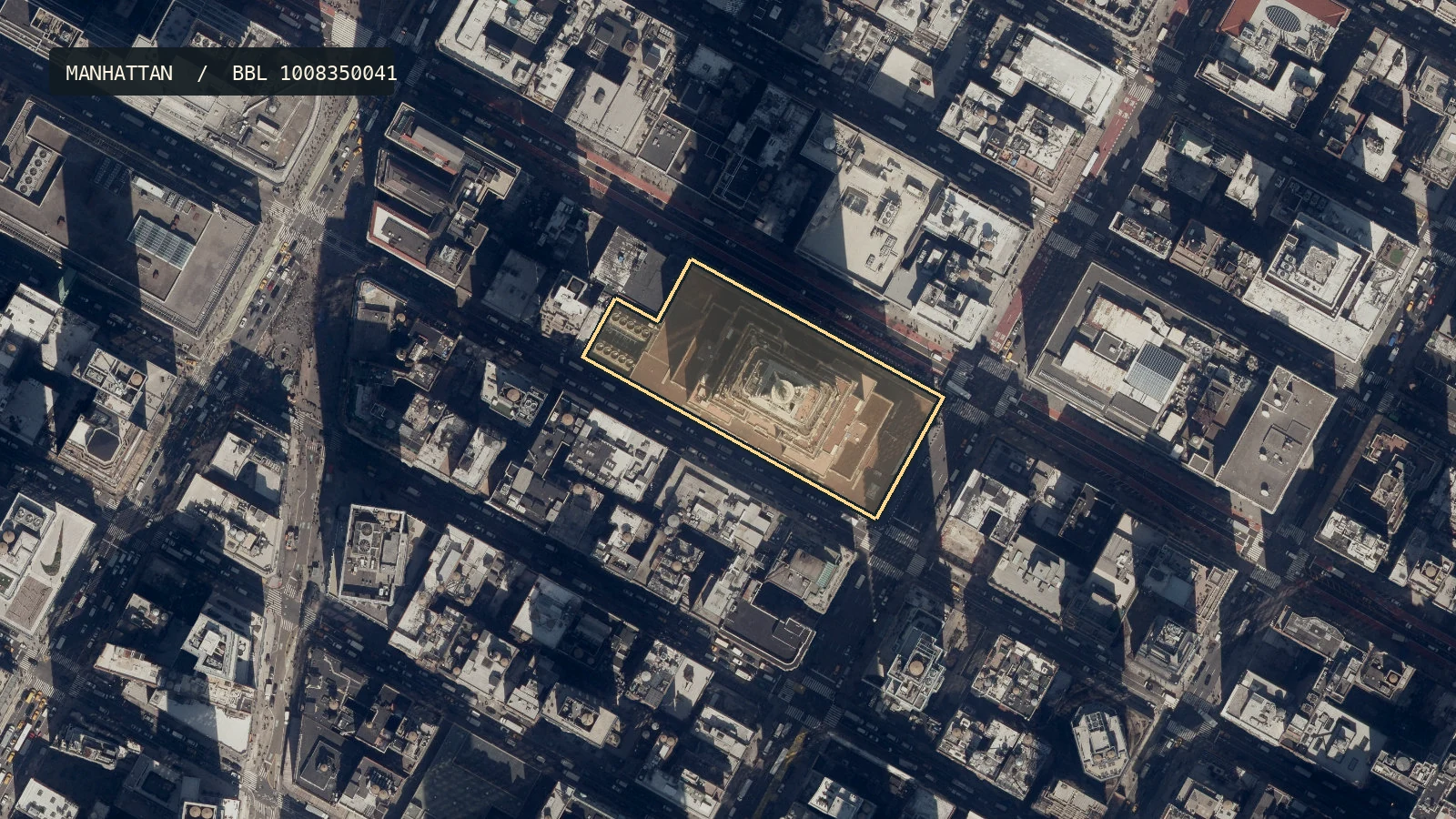
What should the collateral file show?
- Which land and buildings secure the loan
- Match the legal description and parcel identifiers to the actual collateral. Retain each prior identifier and its effective dates when the lot was split, merged or renumbered.
- Which documents supported the review
- Save the deed, mortgage, assignment or release with its instrument number, dates and property references. Flag gaps and confirm the current title position through the title process.
- Which exposure questions are open
- Match flood evidence to the relevant buildings and date. Check environmental facility and permit identifiers as well as the parcel. Record the documents still needed before closing.
Guides and public test cases
- Match a property address to the correct building outline
Test a campus address, three footprint polygons and a shared New York City tax lot.
- Compare commercial property sales and lease terms
At one Manhattan tower, separate a deed from a lease assignment and compare recorded annual rent with a signed fixed-rent schedule.
- Check commercial space availability and lease rollover
Read dated leasing and occupancy metrics, verify available suites, and rebuild a public lease-expiration schedule.
- Trace deeds, ownership and control
Follow two same-day deeds and a later change in decision rights at New York’s GM Building.
- Verify a commercial mortgage maturity date
See how a signed amendment and conditional extension options affect a CMBS maturity watchlist.
- Trace recorded commercial mortgage documents
Use 25 Water Street to link agreements and rent assignments without double-counting the indexed amount.
- Check property tax balances and lien status
Match the tax lot, compare the dated charge balance with notice history, and document the payoff or release evidence.
- Verify building permit scope and completion
Use Brooklyn Army Terminal to distinguish permits from projects and roof replacement from rooftop equipment work.
- Check open building violations before closing
Use the original building ID to verify summons status, balance and proof of correction on separate records.
- Compare property data APIs for credit review
Use three recorded instruments from the Empire State Building to test a collateral file as of a decision date.
- Verify property taxes for a credit file
Follow five years of Empire State Building assessments and reconcile two years of posted tax charges.
- Verify which tax benefits belong in the credit file
Check a signed city abatement and county actuals separately, then verify the facility’s purchase exemptions.
- Trace a parcel through a split or merger
Replay two New York City tax map changes and inspect how the prior IDs connect to the successor parcels.
- Verify the effective flood map for the collateral
Check the map date and any revisions that apply to the buildings securing the loan.
- Connect industrial land to permit and enforcement records
Use a Brooklyn facility to see where an address-only search can miss a regulatory record.
- Review the power behind data center collateral
Identify the utility documents, capacity by phase and delivery conditions that support a powered-site assumption.