

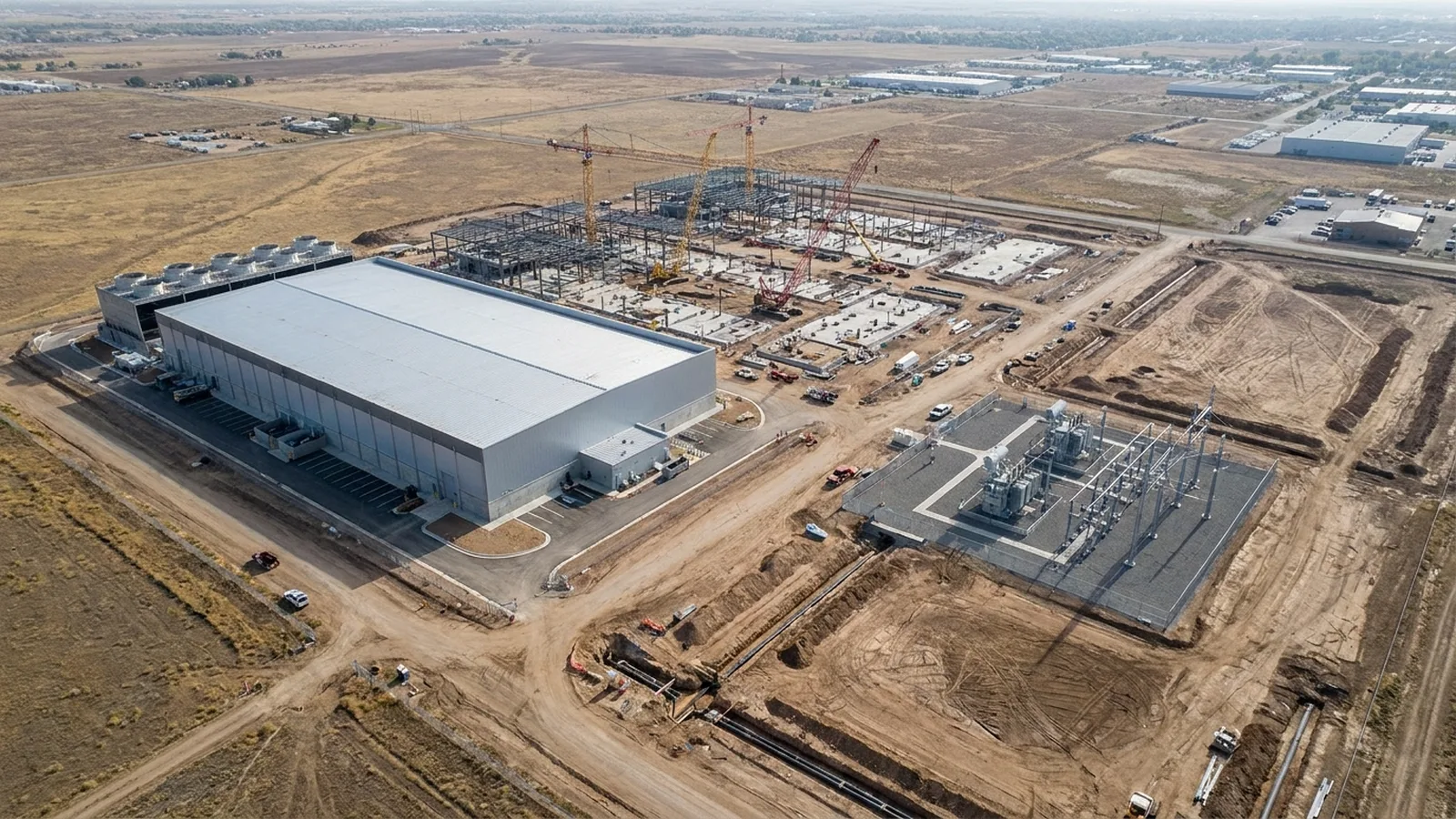
For a neocloud or AI lab, colocation gets you running fastest with the least capital, leasing a whole building or site gives you control at medium scale, and building on powered land gives the lowest long-run cost per MW but the longest wait and the most risk. The deciding variable is the date power is available, which is why the right choice changes with size: colocation below about 5 MW, a lease from about 5 to 50 MW, and building above that.
Before you start
- Time to power usually beats price per kW. Idle GPUs cost far more than rent.
- Building means owning the utility relationship, the large-load tariff and its minimum bill.
- Leasing moves the power risk to the landlord, but only if the lease says so.
- Many neoclouds do all three at once: colo for today, a lease for next year, land for 2028.
The trade-offs
| Colocate | Lease a building or site | Build on powered land | |
|---|---|---|---|
| Typical size | Up to about 10 MW | About 5 to 100 MW | 50 MW to 1 GW+ |
| Time to power | Weeks to months | Months | Usually 18 months or more |
| Capital | Lowest | Fit-out and equipment | Highest |
| Control over design | Low | Medium | Full |
| Who holds the power risk | Provider | Landlord, if the lease says so | You |
| Utility commitments | None directly | Often passed through | Minimum bill, term, security |
When building makes sense
Owning the power pays off once the cluster is big and long-lived enough to absorb a long utility term. New large-load tariffs set minimum bills near 80 to 85% of contract demand for 12 years or more, so you need the demand to fill it.Lawrence Berkeley National Laboratory and The Brattle GroupAEP Ohio
Building also means a utility study cycle. In Texas, large loads now go through ERCOT’s batch process; elsewhere, a load study can take months before construction starts.Willkie Farr & Gallagher
On-site generation as a shortcut
Some neoclouds bridge to grid power with on-site gas. It can work, but it has its own clock: turbines, air permits and gas supply. Cleanview counted only about 2 GW running out of some 90 GW of identified behind-the-meter projects.CleanviewUS EPA
More for neoclouds and AI labs
Questions that come up.
Should a neocloud build its own data center?
Usually only once it needs tens of MW or more for many years. Below that, colocation or leasing gets to power faster with less capital and less utility risk.
Is it faster to lease or build data center capacity?
Leasing an energized building or site is usually months; building on powered land is usually 18 months or more, set by the utility date and long-lead equipment.
What does it cost to commit to utility power for a data center?
Beyond construction, large-load tariffs set minimum bills near 80 to 85% of contract demand for 12 years or more.Lawrence Berkeley National Laboratory and The Brattle GroupAEP Ohio
Can Invariant help us decide?
Yes. Send the cluster plan and dates and we lay out the options we can source in each route.
Sources and references.
Primary sources checked for this guide on . The location, equipment, and operating plan determine which requirements apply to a project.
- CleanviewBehind-the-meter data centers: full report ↗
- Lawrence Berkeley National Laboratory and The Brattle GroupElectricity rate designs for large loads (August 2026) ↗
- Willkie Farr & GallagherERCOT approves new Batch Zero process for large load interconnections ↗
- AEP OhioData center tariff ↗
- US EPAWho has to obtain a Title V permit ↗