

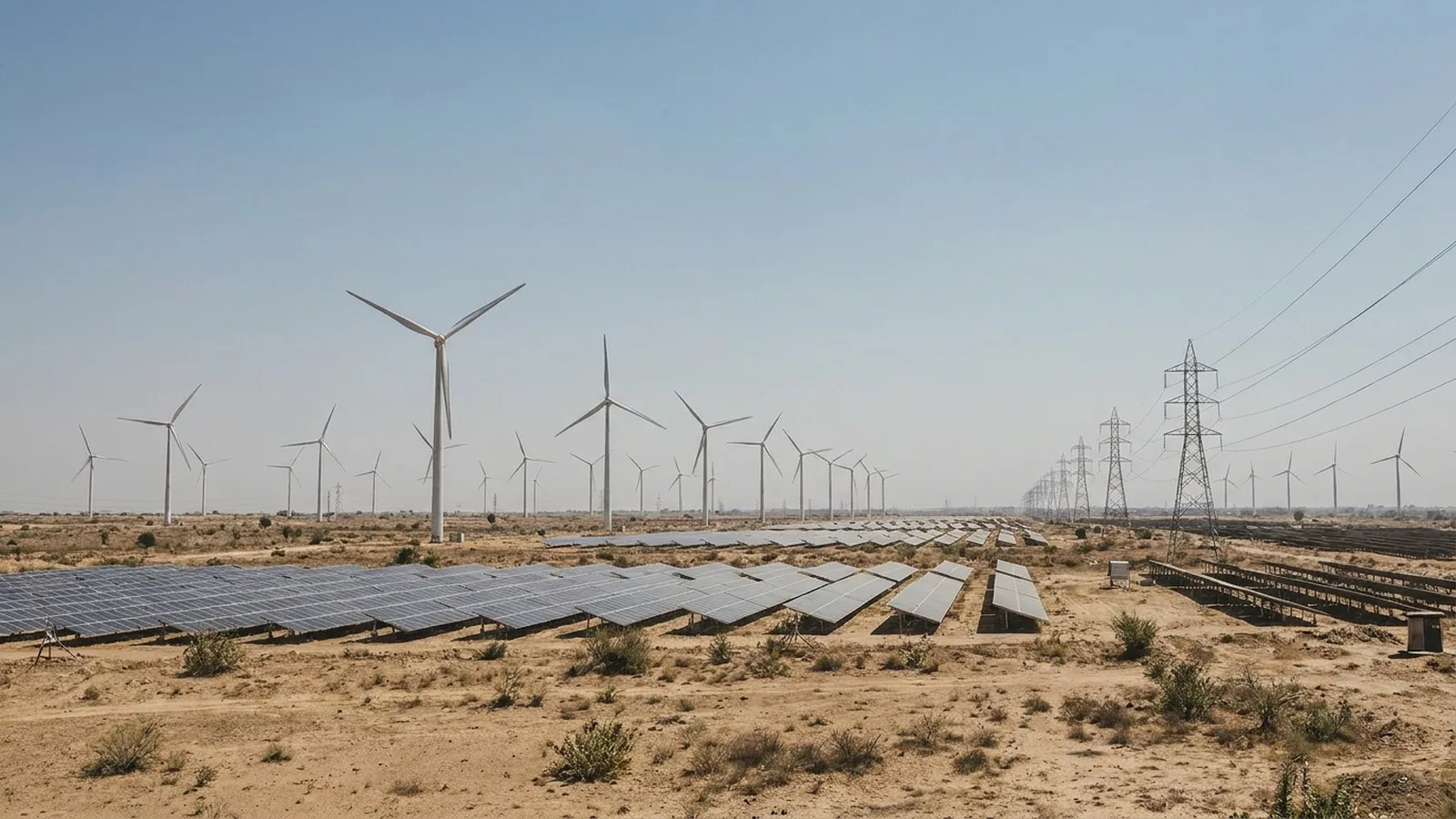
A data centre in India with 100 kW or more of contracted demand can buy renewable power through green energy open access under the Green Energy Open Access Rules 2022, or from captive and group captive plants. The 2022 rules deem an application approved after 15 days, allow at least monthly banking of at least 30% of consumption, and remove additional surcharge for consumers paying fixed charges. The waiver of inter-state transmission charges for new solar and wind is being phased out, with full charges from July 2028. Captive rules amended in March 2026 keep the 26% ownership and 51% consumption tests and make it easier to hold plants through group companies.
Before you start
- Under the Green Energy Open Access Rules 2022, consumers with 100 kW or more of contracted demand or sanctioned load are eligible; captive consumers have no limit.
- The 2022 rules list transmission, wheeling, cross subsidy surcharge and standby charges and, since the January 2023 amendment, banking charges and fees such as load despatch, scheduling and deviation settlement charges; additional surcharge does not apply if fixed charges are paid.
- Under the Ministry of Power’s phase-out, ISTS charges for solar and wind commissioned after 30 June 2025 rise from 25% to 100% by July 2028.
- Under the Electricity Rules 2005 as amended in March 2026, captive and group captive users avoid cross subsidy surcharge and additional surcharge if they meet the 26% ownership and 51% consumption tests.
What the Green Energy Open Access Rules 2022 allow
| Provision | Rule (G.S.R. 418(E), 6 June 2022) |
|---|---|
| Eligibility | Consumers with contracted demand or sanctioned load of 100 kW and above; no limit for captive consumers |
| Approval | Within 15 days, failing which it is deemed approved; applications through a central nodal agency portal |
| Banking | At least monthly, of at least 30% of the total monthly consumption from the discom |
| Permitted charges | Transmission, wheeling, cross subsidy surcharge and standby charges; no other charges (widened by the January 2023 amendment, below) |
| Cross subsidy surcharge | For green energy bought from a renewable plant, cannot rise during 12 years from the plant’s operation by more than 50% of the surcharge fixed for the year open access is granted |
| Additional surcharge | Not applicable to green open access consumers paying fixed charges |
An amendment of 27 January 2023 (G.S.R. 59(E)) raised the cap on standby charges from 10% to 25% of energy charges and added banking charges and other fees and charges, such as load despatch centre fees, scheduling charges and deviation settlement charges, to the list. The state commission fixes the banking charge: in Maharashtra it is 8% of the energy banked, adjusted in kind, as set out in an MSEDCL commercial circular of September 2024.Ministry of Power (gazette copy)Ministry of Power (gazette copy via REC Registry)MSEDCL
The ISTS charge waiver for renewable energy and its phase-out
The Ministry of Power extended the waiver of inter-state transmission charges to solar and wind projects commissioned up to 30 June 2025. After that the waiver steps down by commissioning year, running July to June: projects commissioned from 1 July 2025 to 30 June 2026 pay 25% of the charges, 1 July 2026 to 30 June 2027 50%, 1 July 2027 to 30 June 2028 75%, and from 1 July 2028 100%. The ministry describes this as a waiver reducing by 25% a year after 30 June 2025, lasting 25 years from commissioning. The same 25%, 50%, 75% and 100% steps appear in the ministry’s order for new hydro projects, keyed there to the dates of contract award and PPA signing.PIB, Ministry of PowerPIB, Ministry of New and Renewable EnergyT&D IndiaPIB, Ministry of Power
For a data centre signing a long-term renewable contract now, the commissioning date of the generator decides how much of the inter-state charge the contract carries for its life.
Captive and group captive power under the March 2026 amendment
The Electricity (Amendment) Rules 2026, notified in March 2026, amend Rule 3 of the Electricity Rules 2005. The tests stay at 26% ownership and 51% of the electricity generated consumed by captive users. Ownership now counts subsidiaries, the holding company and fellow subsidiaries, and verification moves to NLDC for inter-state cases.PIB, Ministry of Powerpv magazine India
pv magazine India summarises the other changes: a special purpose vehicle is treated as an association of persons whose members can meet the tests together; each user’s consumption is capped at its proportionate ownership share unless it holds 26% or more; and cross subsidy and additional surcharges are not levied pending verification, with carrying cost if the plant later fails the tests.pv magazine India
State green power terms that matter to data centres
- Maharashtra: green tariff of ₹0.25/kWh over the category tariff for the fifth control period (FY 2025-26 to FY 2029-30), and a 10% wheeling discount for data centres using 100% green power; MERC rejected a zero green tariff for round-the-clock green power to data centres.
- Gujarat 2026-29 policy: at least 51% renewable power for eligible projects; open access is allowed.
- Uttar Pradesh 2026 policy: promotes 50% renewable energy adoption in new data centres by 2030, and offers transmission and wheeling exemptions of up to 100% depending on the renewable source.
- Odisha 2022 policy: 100% reimbursement of transmission and wheeling charges for captive renewable power within the state.
Renewable power deals signed by data centre operators in India
Digital Edge signed a solar power purchase agreement with Hexa Climate for up to 83 MW for the first phase of its Navi Mumbai campus, with power delivered in phases from December 2026. Meta, alongside leasing capacity at Reliance’s 168 MW Jamnagar facility, contracted nearly 1 GW of new renewable capacity with CleanMax and Fourth Partner Energy, TechCrunch reported. The Star reported in May 2026 that STT GDC and Nxtra source about 40% of their energy from non-fossil sources.Digital EdgeTechCrunchThe Star (Asia News Network)
CERC framed its June 2026 draft on dual connectivity around round-the-clock and economical power for data centres and similar loads, which would let a site draw renewable power over the inter-state grid and firm it from the state network. Nuclear is the longer option: the draft SHANTI Rules of August 2026 would license captive nuclear generation and name data centres as a use. Both are drafts.Central Electricity Regulatory CommissionDepartment of Atomic Energy
How Invariant helps
For a site or shortlist in India, Invariant checks how the site gets power: the discom or transmission connection, the voltage the load falls under, the nearest substations, the open access or captive route and the document behind the MW. We also screen seismic zone, flood history, groundwater status and airport height limits, and map the central and state approvals with the authority behind each. Send the state, the MW and the date you need power.
More on data centres in India
Questions that come up.
What is green energy open access in India?
A route under the Green Energy Open Access Rules 2022 for consumers with 100 kW or more of contracted demand to buy renewable power over the grid from a chosen generator. Approval is deemed after 15 days, and charges are limited to those the rules list.Ministry of Power (gazette copy)
Can data centres use green energy open access in India?
Yes. Any consumer with 100 kW or more of contracted demand is eligible, and captive consumers have no limit. Data centres in Maharashtra using 100% green power also get a 10% wheeling discount.Ministry of Power (gazette copy)Maharashtra Electricity Regulatory Commission
What charges does a data centre pay under green energy open access?
Transmission, wheeling, cross subsidy surcharge, standby and banking charges, plus fees such as load despatch, scheduling and deviation settlement charges. Additional surcharge does not apply if the consumer pays fixed charges, and the cross subsidy surcharge cannot rise by more than 50% over 12 years.Ministry of Power (gazette copy)Ministry of Power (gazette copy via REC Registry)
What is group captive power in India?
Generation owned jointly by its users. Under Rule 3 of the Electricity Rules 2005, as amended in March 2026, users must together own at least 26% and consume at least 51% of the annual output; meeting the tests avoids cross subsidy and additional surcharges.PIB, Ministry of Powerpv magazine India
When does the ISTS waiver for renewable energy end?
Solar and wind commissioned up to 30 June 2025 keep the full waiver. Later projects pay 25%, 50% and 75% of the charges in successive July to June years, and 100% from 1 July 2028.PIB, Ministry of PowerPIB, Ministry of New and Renewable EnergyT&D India
Sources and references.
Primary sources checked for this guide on . The location, equipment, and operating plan determine which requirements apply to a project.
- Ministry of Power (gazette copy)Electricity (Promoting Renewable Energy through Green Energy Open Access) Rules 2022, G.S.R. 418(E) ↗
- Ministry of Power (gazette copy via REC Registry)Electricity (Promoting Renewable Energy Through Green Energy Open Access) Amendment Rules 2023, G.S.R. 59(E), 27 January 2023 ↗
- MSEDCLCommercial Circular No. 346 (September 2024) ↗
- PIB, Ministry of PowerISTS charges waiver extended to projects commissioned up to 30 June 2025 ↗
- PIB, Ministry of New and Renewable EnergyWaiver of ISTS charges for renewable energy projects (Rajya Sabha reply, 17 March 2026) ↗
- T&D IndiaWaiver of ISTS charges on renewable energy to be phased out ↗
- PIB, Ministry of PowerWaiver of ISTS charges for hydro projects, with the 25%, 50%, 75%, 100% trajectory ↗
- PIB, Ministry of PowerElectricity (Amendment) Rules 2026 on captive generation ↗
- pv magazine IndiaReforming captive power in India: key changes under the Electricity (Amendment) Rules 2026 ↗
- Maharashtra Electricity Regulatory CommissionMSEDCL multi-year tariff order, Case 217 of 2024 (28 March 2025) ↗
- tele.netGujarat government launches Data Centre Policy 2026-29 ↗
- Cyril Amarchand MangaldasGujarat Data Center Policy 2026-2029 ↗
- Invest UPUttar Pradesh Data Centre Policy 2026 ↗
- Invest OdishaOdisha State Data Centre Policy 2022 ↗
- Digital EdgeDigital Edge India signs 83 MW solar PPA ↗
- TechCrunchMeta signs first AI data center deal in India with Reliance ↗
- The Star (Asia News Network)India's data centre boom is straining its power grid ↗
- Central Electricity Regulatory CommissionDraft GNA Fourth Amendment, explanatory memorandum (16 June 2026) ↗
- Department of Atomic EnergyDraft SHANTI Rules 2026 (14 August 2026) ↗